
If you have recently stepped into the world of fitness, you have likely heard this popular piece of advice from running gurus: "If you want to build great endurance, you must focus your training on zone 2 running." On paper, this theory is highly celebrated in modern sports science because of its ability to efficiently improve cardiovascular capacity without overtaxing the body.
However, in real-world practice, this golden rule frequently backfires. Strictly forcing the zone 2 running methodology during the early stages of training can severely disrupt a beginner's consistency. Why does this strategy—proven so effective for elite athletes—turn into a demotivating trap for novices? Let’s dive into the deep physiological analysis and practical solutions.

The Core Reasons Why Zone 2 Running Fails Beginners
1. Extremely Restricted Aerobic Window
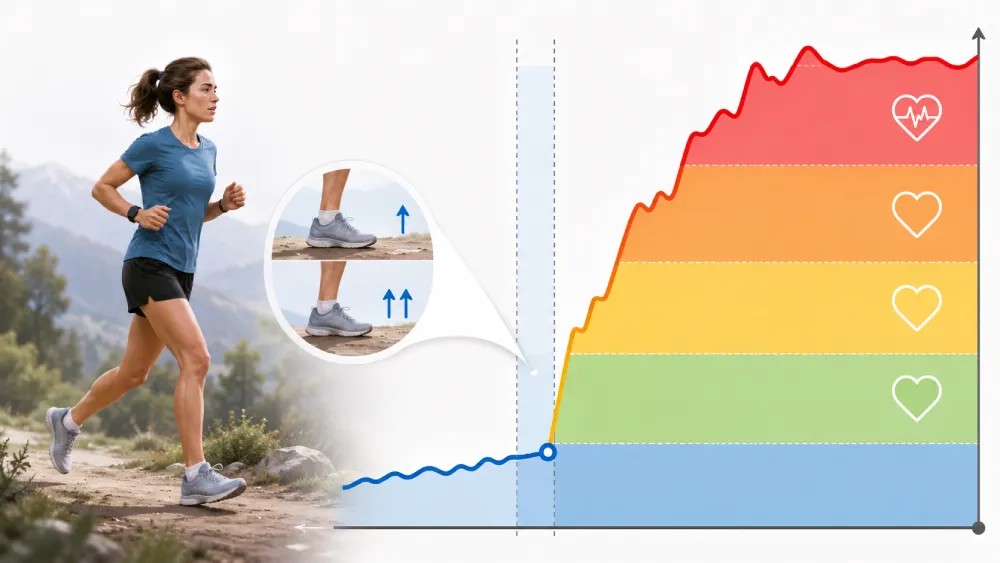
As someone new to a cardio routine, your heart rate window for staying within a low-intensity zone is exceptionally narrow. When you attempt a zone 2 running session, even the slightest physical stimulus triggers a massive spike in your circulatory system.
Even if you step just a fraction faster than a brisk walking pace, your heart rate will instantly rocket into zone 3 or zone 4. Consequently, maintaining that low target threshold becomes nearly impossible from the very first minute.
2. A Catalyst for Frustration and Mental Hurdles
Rigidly forcing yourself to keep your smartwatch screen glowing in the zone 2 running bracket creates deep frustration. Many beginners mistakenly assume something is medically wrong with their bodies, or they conclude they are hopelessly out of shape because their heart rates soar effortlessly.
In reality, a rapid cardiac spike and heavy breathing are 100% normal biological responses for an unconditioned body. The mental stress of constantly staring at a digital device often drives beginners to quit a promising new habit altogether.
3. Early Training Volumes Lack the Need for Precision
Generally speaking, a beginner does not accumulate enough weekly training volume to require hyper-precise intensity zones. During this initial phase, achieving perfect numerical metrics simply isn't a priority. The biggest hurdle to conquer at the starting line is not categorizing your cardio zones; it is establishing a consistent routine of moving your body.
Crucial Physiological Fact: The human body's metabolic adaptation to aerobic exercise takes a significant amount of time. As consistency is maintained, your body naturally constructs a powerful "aerobic base." This adaptation eventually widens your cardiac window, allowing your heart rate to drop over time even while running at the exact same pace.
Where Beginner Runners Should Actually Focus
Instead of obsessing over digital metrics on your wrist, redirect your energy and focus toward these three fundamental pillars of fitness:
-
Finding a comfortable rhythm and enjoying each movement session without mental pressure.
-
Improving running posture, stride mechanics, and basic breathing patterns during movement.
-
Gradually improving cardiorespiratory fitness to completely avoid the risk of muscle injuries.
It is highly recommended for beginners to adopt a structured run-walk interval method. Moving at a very slow, conversational pace is the absolute best foundation to safely adapt your muscles, joints, and tendons to the constant impact of the ground.
3 Alternative Training Methods That Work Way Better
If you want to train your cardio endurance measurably without the stress of monitoring heart rate numbers, utilize these three scientifically backed alternatives:
1. Utilize the Rating of Perceived Exertion (RPE) Scale
The RPE scale is an intensity evaluation method based on subjective physical perception, ranging from 1 to 10. A score of 1 represents total rest, while 10 signifies your absolute maximum physical limit.
For beginners, target a subjective intensity level between scales 3 and 5. If your stride starts to feel breathless, consciously lower your pace immediately so the activity remains light, sustainable, and enjoyable.
2. Implement the Talk Test
This method serves as the most accurate physiological indicator you can use instantly without any electronic tracking gear. Adjust your movement speed so that you can easily speak in full, coherent sentences (about 15 to 30 words at a time) or casually hum a tune without gasping for air. If speaking becomes difficult, it is a definitive signal to transition into a walk.
3. Incorporate Smart Cross-Training
If your specific goal is to condition your heart at a low intensity (matching the principles of zone 2 running), achieve it through alternative sports where the mechanical load is much easier to govern. Excellent options include steady-state cycling at a constant RPM, using an elliptical machine, or performing brisk incline walking on a treadmill.