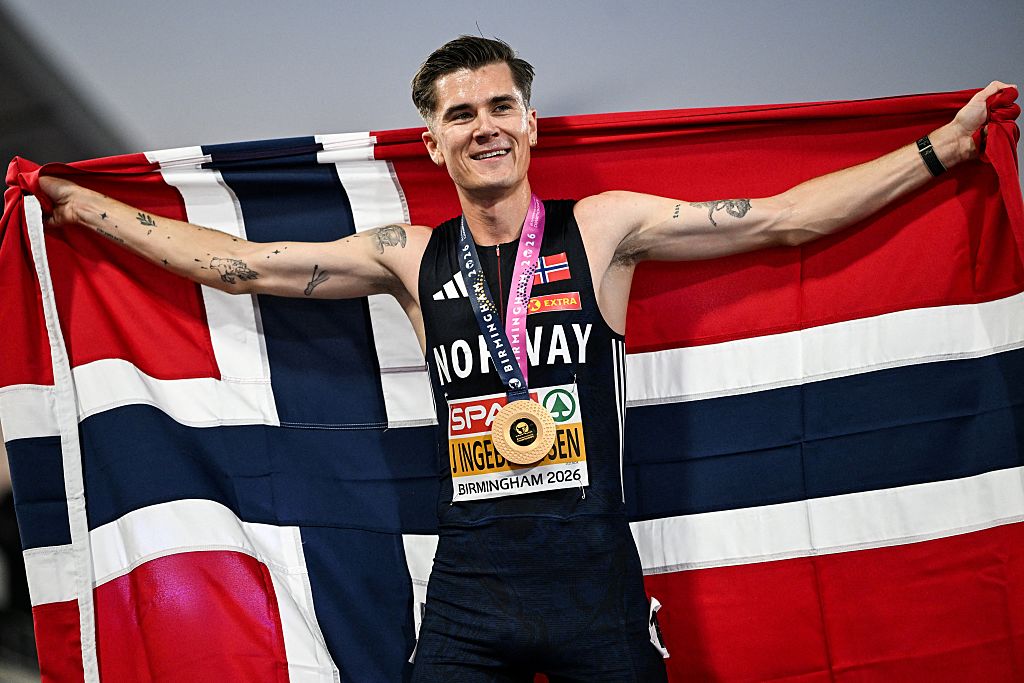
Jakob Ingebrigtsen marked an incredible comeback after nearly a year of absence due to Achilles issues. The Norwegian runner successfully defended his European 5000-meter title in Birmingham with a dramatic win through a sharp sprint in the final lap.
After months of battling an Achilles injury and undergoing surgery in February, Jakob Ingebrigtsen finally returned to the track in a way that was hard to imagine more perfect.
In the 5000-meter final in Birmingham on Monday (10/8), Ingebrigtsen not only returned to competition. He immediately became the champion with a time of 13:15.29, beating several of Europe's best runners after executing a very patient racing strategy.
This comeback felt even more special because before arriving at Alexander Stadium, Ingebrigtsen had practically not competed for nearly a year.
From the Back, Ingebrigtsen Slowly Chases the Front Runners
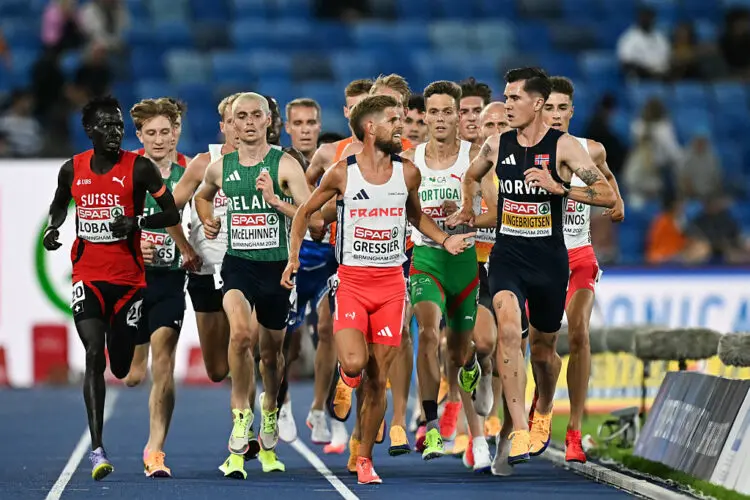
In the early phase of the race, Ingebrigtsen showed no signs of dominance.
The 25-year-old runner chose to stay behind the pack. This position is actually not unfamiliar to him in the 5000-meter event. Ingebrigtsen is known for being quite comfortable avoiding the crowd early on before gradually moving to the front as the race enters its determining phase.
However, this time the situation was different.
After a long injury and Achilles surgery, questions arose about his fitness. As he lingered at the back for a while, Ingebrigtsen's chances of defending his title appeared not very convincing.
Entering the second half of the race, the pace at the front began to slow slightly and the group closed in.
This was the momentum that Ingebrigtsen capitalized on.
Slowly, he began to pass his opponents and rejoined the top six group.
Three and a Half Laps Remaining, the Champion Begins to Attack
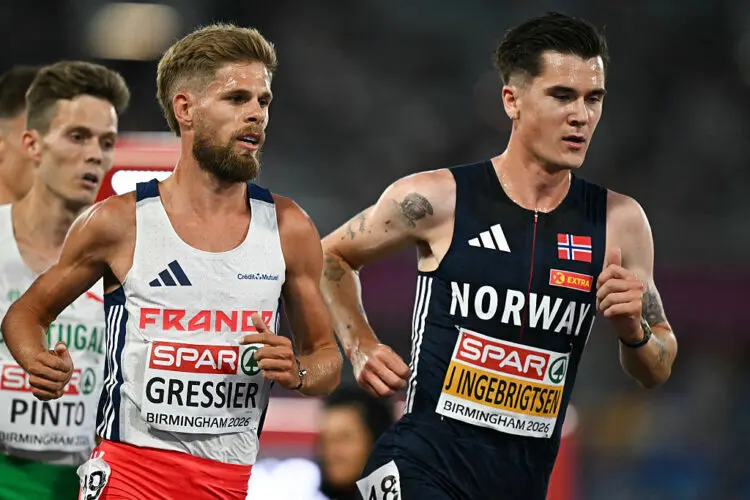
About three and a half laps to go, Ingebrigtsen finally moved to the front.
The change in position signaled that the defending champion began to feel confident in his physical condition.
With three laps remaining, an interesting moment occurred between Ingebrigtsen and Jimmy Gressier, the world 10,000-meter champion from France. They briefly exchanged handshakes and smiles while running side by side.
But this relaxed atmosphere did not last long.
As the race entered the last 1000 meters, Gressier took the lead and the race intensity sharply increased.
The competition within the group was also quite fierce. Irish runner Nick Griggs even lost one of his shoes. Nevertheless, Griggs finished the race in eighth place.
Trapped Near the Finish, Ingebrigtsen Remains Calm
The biggest drama occurred on the last lap.
Gressier was still in the lead as the group entered the final turn. German runner Florian Bremm then began to accelerate and moved past Gressier.
Meanwhile, Ingebrigtsen found himself in a less advantageous position.
He was briefly held back behind several runners with Etienne Daguinos on his outside. In such a situation, a miscalculation on the lane could lose the chance of victory in seconds.
However, Ingebrigtsen's experience came into play.
He shifted to the outside, opening space nearly to the third lane, then launched his final acceleration.
Bremm was passed.
Gressier was also passed.
A few meters later, Ingebrigtsen became the first to cross the finish line.
Jakob Ingebrigtsen Wins in 13:15.29
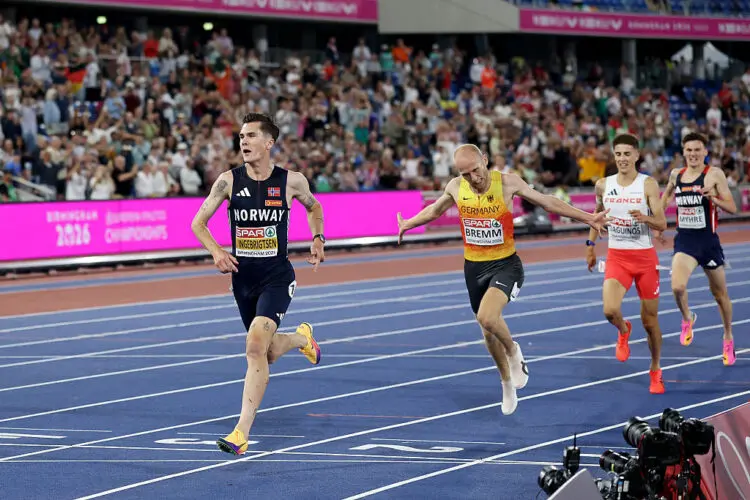
Ingebrigtsen clocked a time of 13:15.29 to secure the title.
Florian Bremm had to settle for silver after finishing just 0.31 seconds behind with a time of 13:15.60.
Etienne Daguinos took bronze in 13:16.09, while Jimmy Gressier, who led for a long time, eventually finished fourth with 13:16.36.
What is most interesting is not just Ingebrigtsen's finishing time, but how he completed the final phase of the race.
Jakob Ingebrigtsen's Splits:
- Last 3000 meters: 7:43
- Last 1000 meters: 2:26
- Last 200 meters: 26.4 seconds
Closing the 5000 meters with 200 meters in 26.4 seconds, especially after a long injury period, demonstrates that Ingebrigtsen's finishing ability remains one of his greatest weapons.
Comeback After Achilles Surgery
This victory holds greater significance than just a gold medal.
Ingebrigtsen faced Achilles issues that sidelined him for a long time before finally undergoing surgery in February.
His decision to compete in Birmingham was even made quite close to the race day. He mentioned that about two weeks prior, he had just imagined being able to return to compete in the championship.
His condition then continued to improve day by day until it was sufficient for him to become champion again.
The victory in Birmingham also extends Ingebrigtsen's remarkable achievements in European competition. This marks his 15th consecutive European track title.
If including age group competitions, indoor events, and cross country, the total number of European titles he has amassed reaches 23 titles.
Men's 5000 Meter Final Results
| Position | Athlete | Country | Time |
|---|---|---|---|
| 1 | Jakob Ingebrigtsen | Norway | 13:15.29 SB |
| 2 | Florian Bremm | Germany | 13:15.60 |
| 3 | Etienne Daguinos | France | 13:16.09 |
| 4 | Jimmy Gressier | France | 13:16.36 |
| 5 | Magnus Tuv Myhre | Norway | 13:16.59 SB |
| 6 | Mahadi Abdi Ali | Netherlands | 13:17.17 SB |
| 7 | Dominic Lobalu | Switzerland | 13:18.24 |
| 8 | Nicholas Griggs | Ireland | 13:21.07 |
Ingebrigtsen's training partner, Magnus Tuv Myhre, finished in fifth place with 13:16.59.
Meanwhile, Dominic Lobalu, who was previously considered one of the names to watch for winning the race, finished seventh after being in front during the earlier phases.
Not Just a Win, This is Ingebrigtsen's Comeback Statement
Ingebrigtsen may not yet be at his best condition that once made him one of the most dominant middle and long-distance runners in the world.
However, Birmingham sent one important message: his speed, tactical calmness, and finishing kick are still intact.
He did not win the race by dominating from the start. Instead, Ingebrigtsen waited, read the race's developments, maintained his position, and then made decisions at the right moments.
For runners, there is an interesting lesson from this race. Position at the start of the race does not always determine the final result. The ability to manage energy, read pace changes, choose position, and have a speed reserve for the final phase can make the difference.
After nearly a year without racing and just a few months post-Achilles surgery, this 5000-meter victory marks a very promising start for the next phase in Jakob Ingebrigtsen's season.